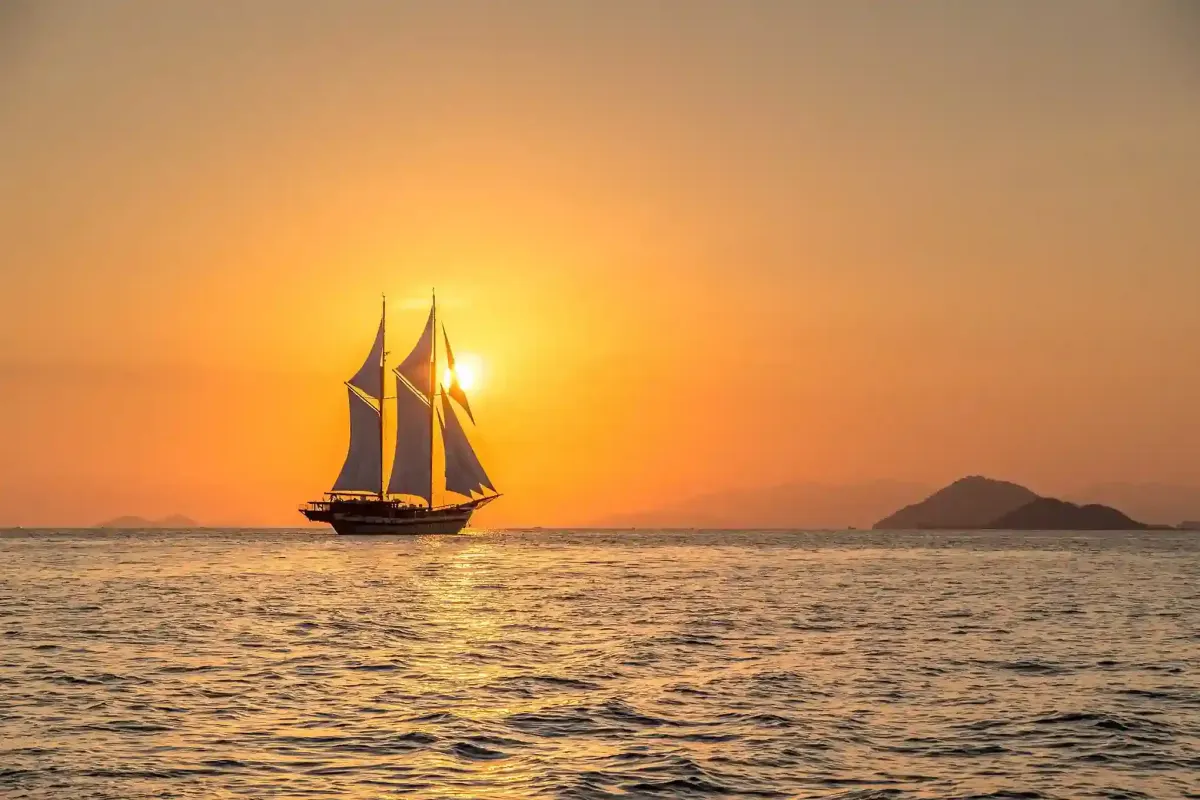
Sailing Raja Ampat in December on a Custom Phinisi from Indonesia
8 min read
- Access to over 1,500 remote, jungle-clad islands and cays.
- diving with more than 1,600 fish species and 75% of known coral species.
- An experience elevated by the bespoke luxury and traditional craftsmanship of a privately commissioned yacht.
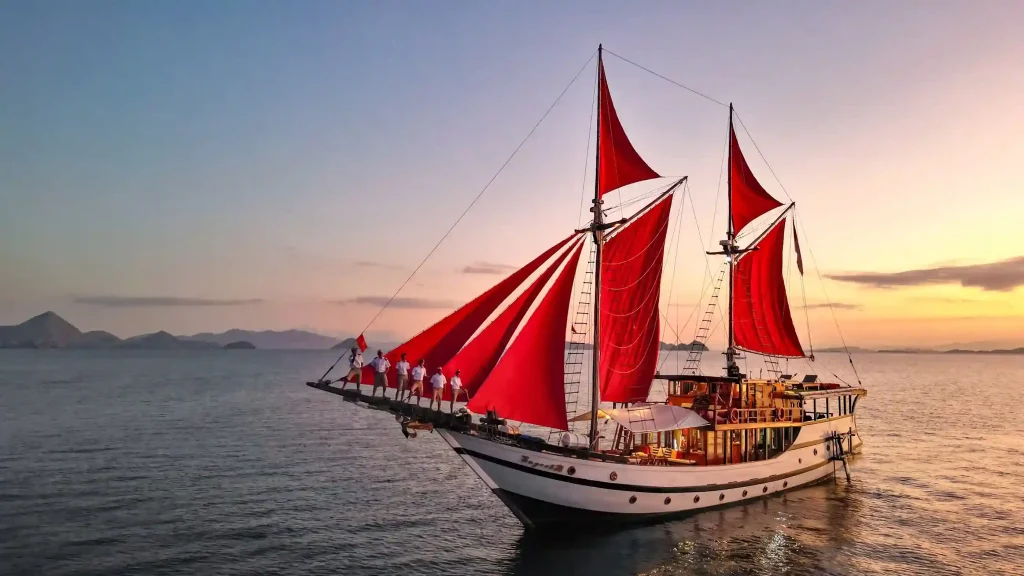
The air is thick with the scent of salt and damp earth. From the foredeck of the Amandira, a 52-meter phinisi whose ironwood hull slices silently through the turquoise water, the world feels primordial. A pair of Blyth’s hornbills glide from the dense jungle canopy of a nearby karst island, their distinctive calls echoing across the Dampier Strait. It is 7 AM, the sun is just beginning to assert its authority, and the only sound besides the birds is the gentle lapping of water against the hull. This is the overture to a day in Raja Ampat in December, an experience made possible only by the unique freedom afforded by a custom phinisi from Indonesia, a vessel that is as much a part of the destination as the coral gardens below.
The Phinisi Renaissance: More Than Just a Boat
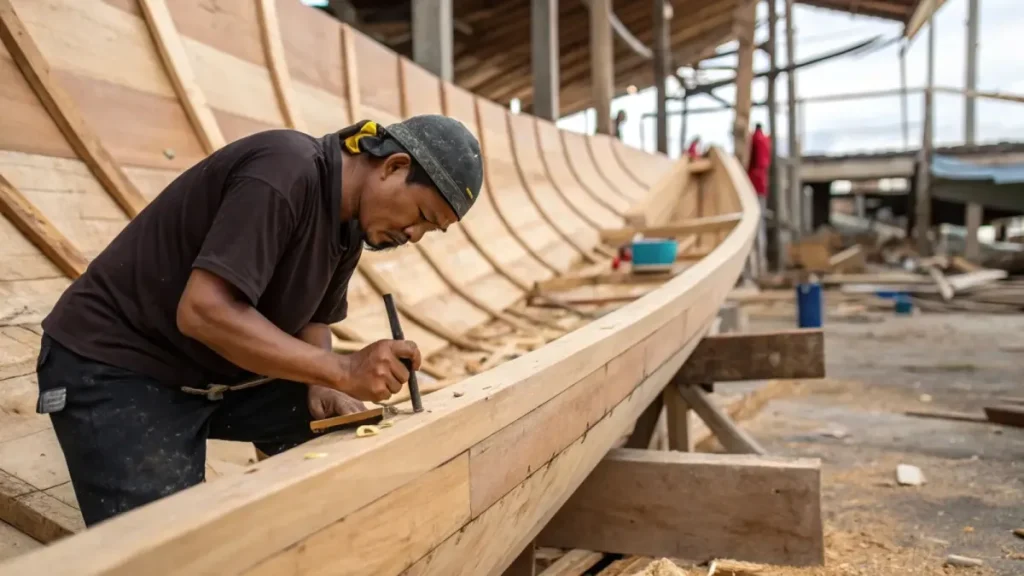
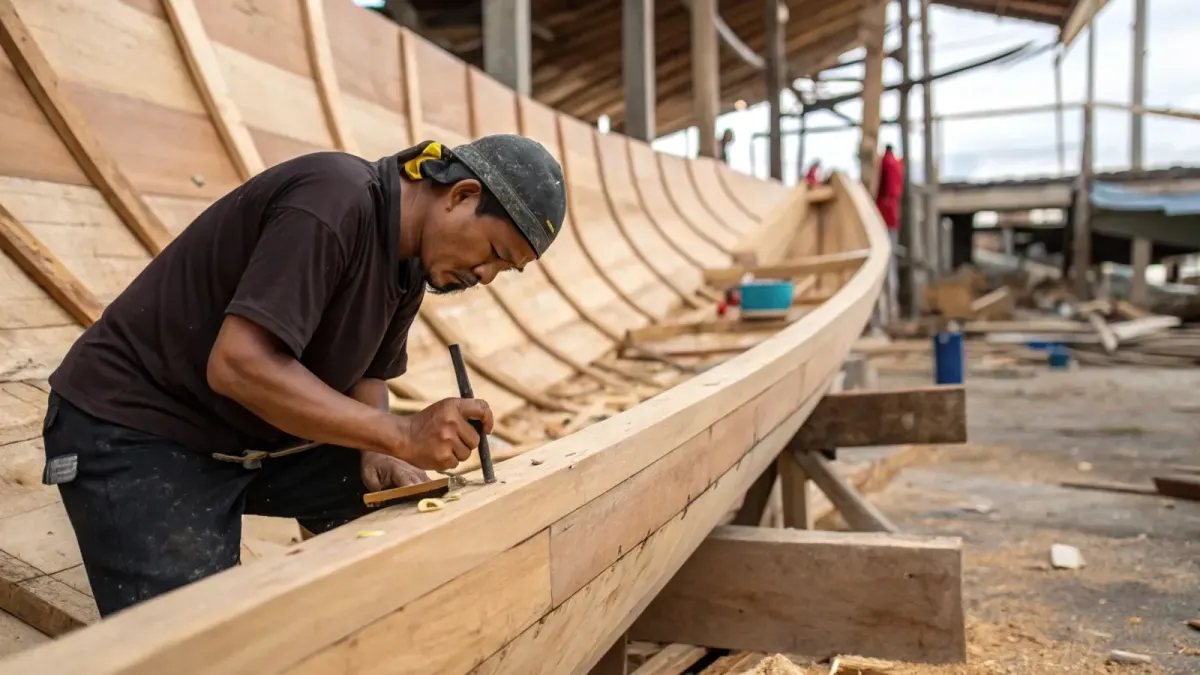
To call these vessels “boats” is a profound understatement. The modern luxury phinisi is the culmination of centuries of maritime heritage, a direct descendant of the two-masted trading ships built by the Konjo people of South Sulawesi. This shipbuilding art, passed down through generations, was inscribed on UNESCO’s list of Intangible Cultural Heritage in 2017, its cultural significance. For decades, I’ve seen these ships evolve. What were once rugged spice trading vessels have undergone a remarkable transformation. Today, the world’s finest custom phinisi yachts are born from the same beaches in Bira and Tanah Beru, but their interiors rival those of any Mediterranean superyacht. The process is a fascinating blend of ancient technique and modern engineering. Hulls are still planked by hand, the ironwood and teak shaped by eye, yet they house state-of-the-art navigation systems, dive compressors, and watermakers. The investment in such a vessel, often running from $2 million to upwards of $10 million for a new build, reflects a desire for something authentic—a floating masterpiece that provides an intimate connection to the waters it sails. This is where a premier boat builder indonesia demonstrates their value, translating a client’s vision into a seaworthy piece of art.
Why December in Raja Ampat is the Pinnacle of Marine Travel
Timing, in travel, is everything. Arriving in Raja Ampat in December places you squarely at the beginning of the most favorable season. The tempestuous southeast monsoon, which brings wind and rain from June to September, has fully subsided. In its place, the northwest monsoon ushers in a period of placid seas and dry, sunny days that typically lasts until April. For divers and snorkelers, this translates to extraordinary underwater visibility, frequently exceeding 30 meters. Captain Hasrun, a man with two decades of experience navigating these waters, explained it to me over a map in the ship’s lounge. “December is the turning point,” he said, tracing a line through the Dampier Strait. “The currents are still strong, bringing the nutrients, but the surface is calm. The mantas are here, the water is clear. It is the perfect balance.” The statistics back him up. Water temperatures hover at a consistent 28-29°C (82-84°F), ideal for long immersion times without a heavy wetsuit. This period, from December to February, represents the absolute peak for marine encounters and comfortable cruising, making it the most sought-after window for chartering a private vessel. Booking a year or even 18 months in advance is not uncommon for the top-tier phinisis.
Crafting the Itinerary: Beyond Wayag and Pianemo
The iconic images of Raja Ampat—the conical karst islands of Wayag and the star-shaped lagoon of Pianemo—are certainly on the agenda. But the true luxury of a private charter on a custom phinisi from Indonesia is the ability to deviate from the well-trodden path. Our 11-night itinerary was a masterwork of flexibility, designed to chase the best conditions and avoid the handful of other liveaboards in this vast, 4.6-million-hectare marine sanctuary. One morning, on a tip from a local fisherman, we diverted to a previously uncharted manta cleaning station near the island of Arborek, spending three hours alone with more than a dozen of the gentle giants. Another day was dedicated to exploring the labyrinthine blue water mangroves of Misool in the south, paddling through channels so quiet we could hear the clicking of pistol shrimp on the seafloor. This is impossible on a fixed schedule. The key is a knowledgeable crew and the right vessel. Our expedition leader, Andre, used tide charts and his deep local knowledge to guide us into hidden lagoons accessible only at high tide, and to dive sites like “Magic Mountain” at the precise moment the current attracted schooling barracuda and grey reef sharks. This level of planned itinerary is the core value proposition; it transforms a trip into an expedition, where every day’s plan is sketched in pencil, not ink.
The Onboard Experience: A Masterclass in Indonesian Hospitality
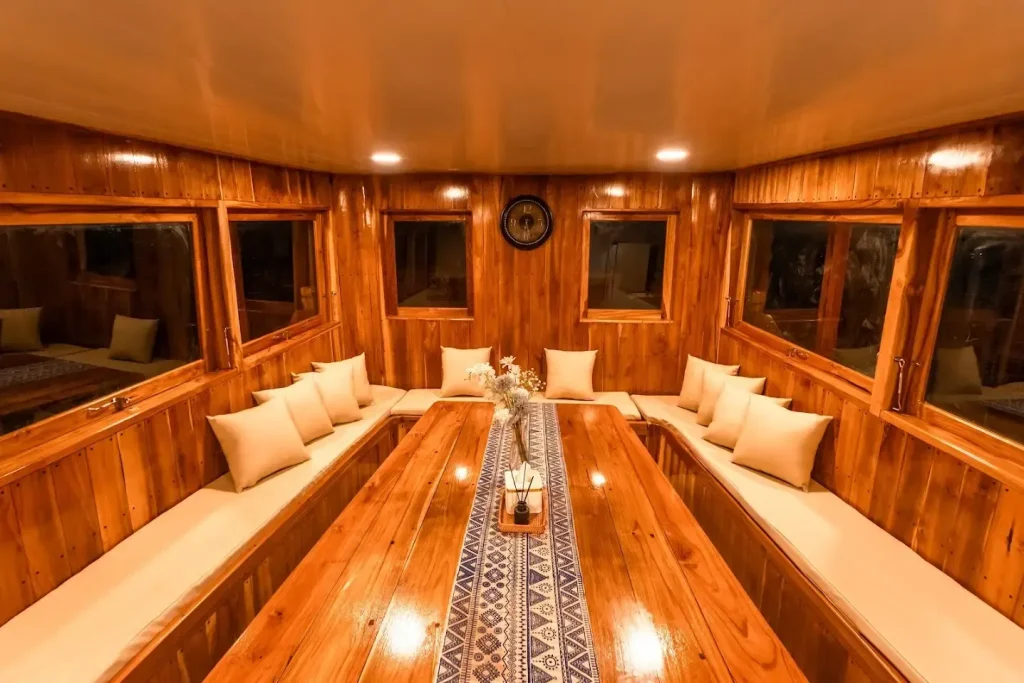
Life aboard a vessel of this caliber redefines the concept of a liveaboard. With a crew of 18 for just 10 guests, the service was intuitive and deeply personal. The ship itself, a product of a meticulous three-year build, was a study in understated luxury. Polished teak decks, cabins adorned with handwoven ikat textiles, and en-suite bathrooms finished in Italian marble. Yet, the true luxury was in the details. After each dive, we were met with warm, lemongrass-scented towels and fresh calamansi juice. The onboard chef, Wayan, formerly of Amankila in Bali, crafted menus that were both sophisticated and deeply Indonesian. One evening, he presented a whole-grilled yellowfin tuna, purchased that afternoon from a fisherman in a dugout canoe for about $20, served with five distinct types of house-made sambal. The ship was equipped with two custom-built tenders for diving, a full set of high-end Scubapro gear, kayaks, and stand-up paddleboards. Evenings were spent on the upper deck, analyzing the day’s underwater footage on a large screen or simply charting constellations in a sky utterly devoid of light pollution. Partnering with a reputable Indonesian yacht builder is paramount to achieving this synthesis of traditional design and five-star functionality.
The Underwater Kingdom: What 30 Meters of Visibility Reveals
Raja Ampat is, fundamentally, a destination for those who wish to witness the apex of marine biodiversity. Its location at the heart of the Coral Triangle is no mere geographical footnote; this area, according to Conservation International, is home to 75% of the world’s known coral species and 1,628 species of reef fish. A single dive site here can host more species than the entire Caribbean Sea. December’s pellucid water quality makes these encounters all the more impactful. At a site called Manta Sandy, we watched oceanic mantas with 5-meter wingspans queue patiently for their turn at a cleaning station. In the mangroves of Misool, we searched for the elusive archerfish, which spits jets of water to hunt insects. Our divemaster, a marine biologist by training, pointed out pygmy seahorses no bigger than a fingernail, camouflaged perfectly on a gorgonian sea fan. The sheer density of life is overwhelming. On our final dive at Cape Kri—a site that holds the world record for the most fish species (374) identified on a single dive—we were enveloped by a tornado of schooling jacks, while wobbegong and blacktip reef sharks patrolled the reef edge. This is not just diving; it is a full-scale immersion into the planet’s most vibrant and vital marine ecosystem, a spectacle made accessible by the unique platform of a private phinisi.
Quick FAQ: Chartering Your Phinisi Expedition
What is the ideal charter length for Raja Ampat?
A minimum of 10 to 12 nights is recommended. This allows sufficient time to explore either the northern region (including Wayag and the Dampier Strait) or the southern region (Misool) without feeling rushed. A 14-night or longer charter can comfortably cover both, though this involves a significant open-water crossing.
How do you commission a custom phinisi?
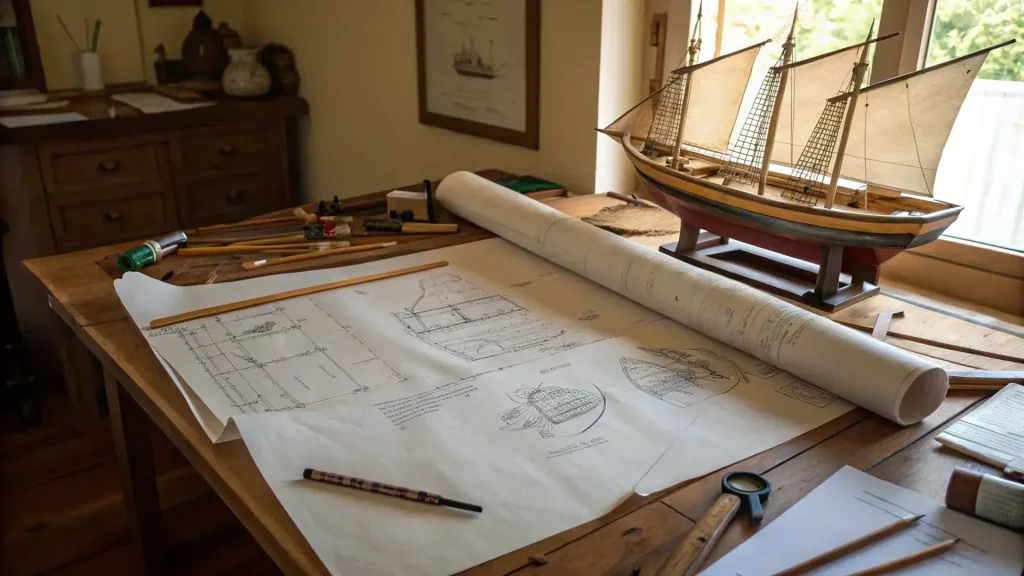
The process is an intimate collaboration that begins with selecting a specialized boat builder in Indonesia. It involves detailed consultations on naval architecture, GA (General Arrangement), hull materials (typically ironwood and teak), interior design, and technical outfitting. The build can take anywhere from 24 to 36 months from initial concept to sea trials.
Are these charters suitable for non-divers?
Absolutely. The experience is equally rich for those who stay on the surface. Activities include guided kayaking and paddleboarding through surreal karst lagoons, birdwatching treks to spot the endemic Red Bird of Paradise, visiting pearl farms, and engaging with remote Papuan communities. The landscape itself is a primary attraction.
What are the marine park fees?
As of late 2023, all visitors to the Raja Ampat Marine Park are required to purchase an entry permit. The fee is IDR 700,000 (approximately $45 USD) for international visitors and is valid for 12 months. This fee directly supports conservation and community programs within the park.
The ultimate journey to Raja Ampat begins not at the airport in Sorong, but on the drawing boards in a Sulawesi boatyard. It is an odyssey that requires vision, patience, and a deep appreciation for craftsmanship. The phinisi is more than a means of transport; it is the key that unlocks the most remote corners of this aquatic Eden, a floating sanctuary that carries the soul of Indonesia within its timber. For those looking to create their own legacy on the water, the journey of a lifetime starts with a single conversation. You can explore the possibilities and start the conversation with an expert boat builder indonesia today to begin crafting your own vessel for the world’s last frontier.