A 7-Day Luxury Komodo Itinerary on a Custom Indonesian Phinisi
9 min read
- Explore remote coves and dive sites inaccessible to larger vessels or day trips.
- Enjoy a fluid itinerary tailored daily to wildlife sightings, weather, and guest preferences.
- Experience onboard amenities like private chefs, dive masters, and spa therapists.
The Modern Voyage: Reimagining Tradition Aboard a Phinisi
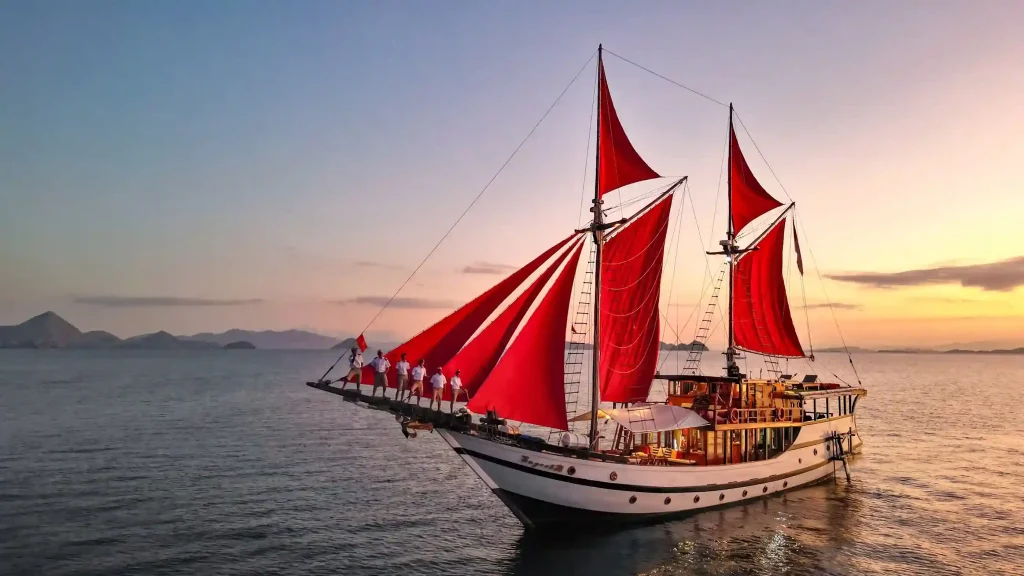
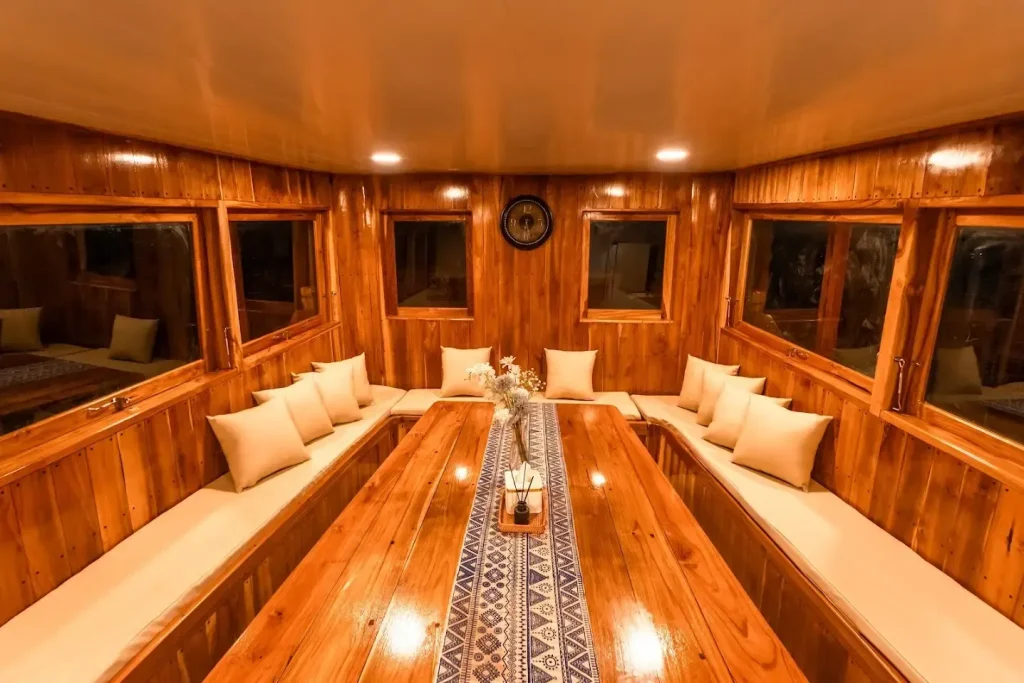
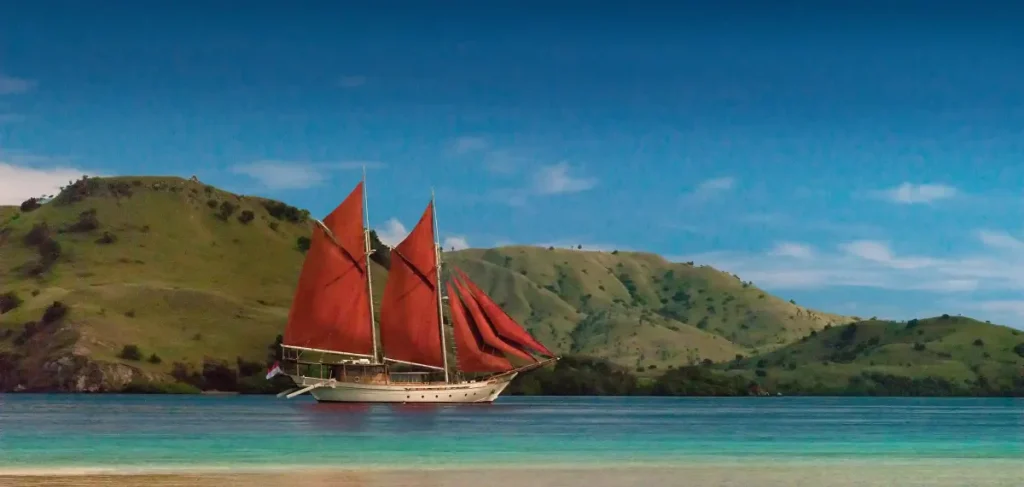
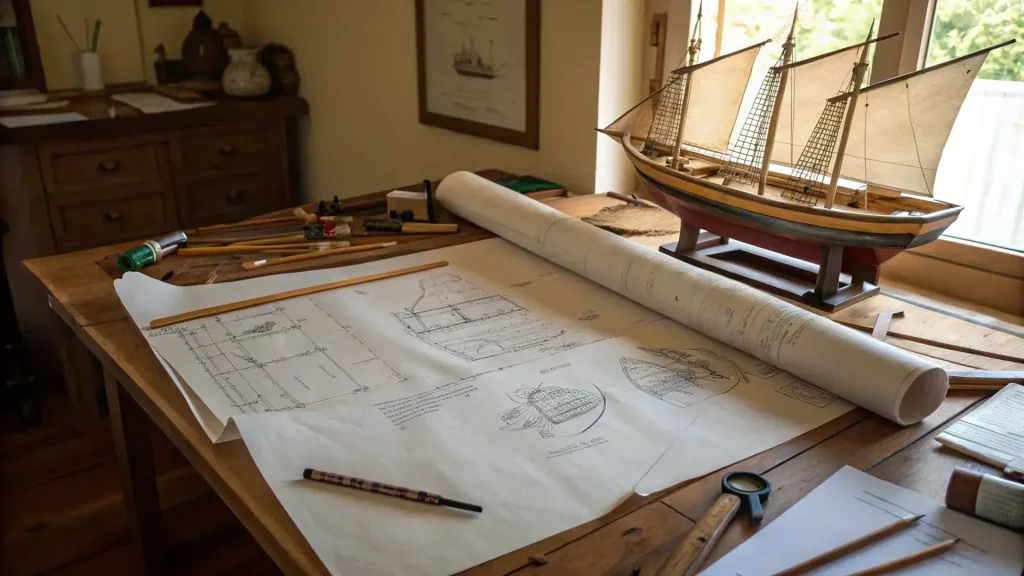
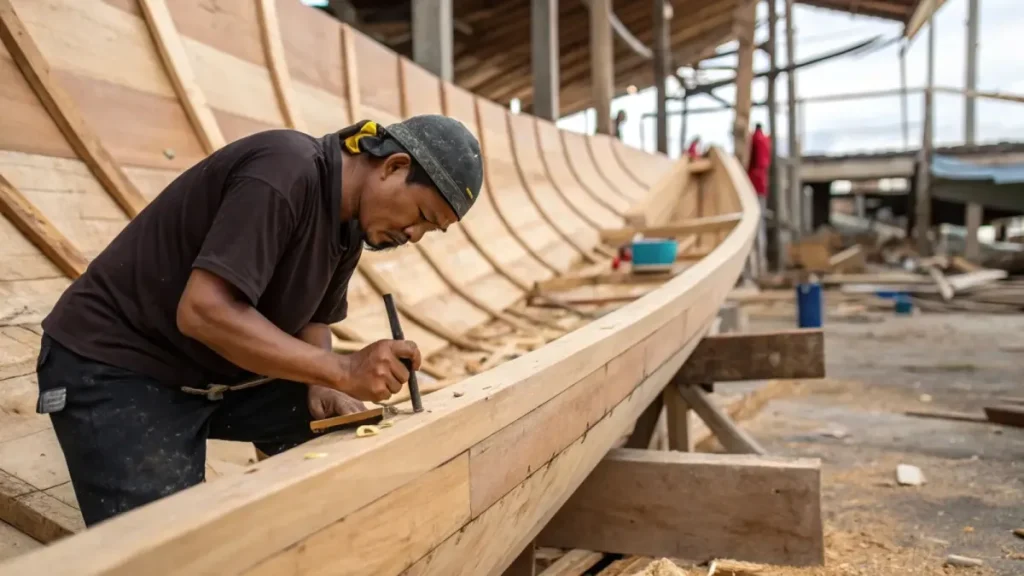
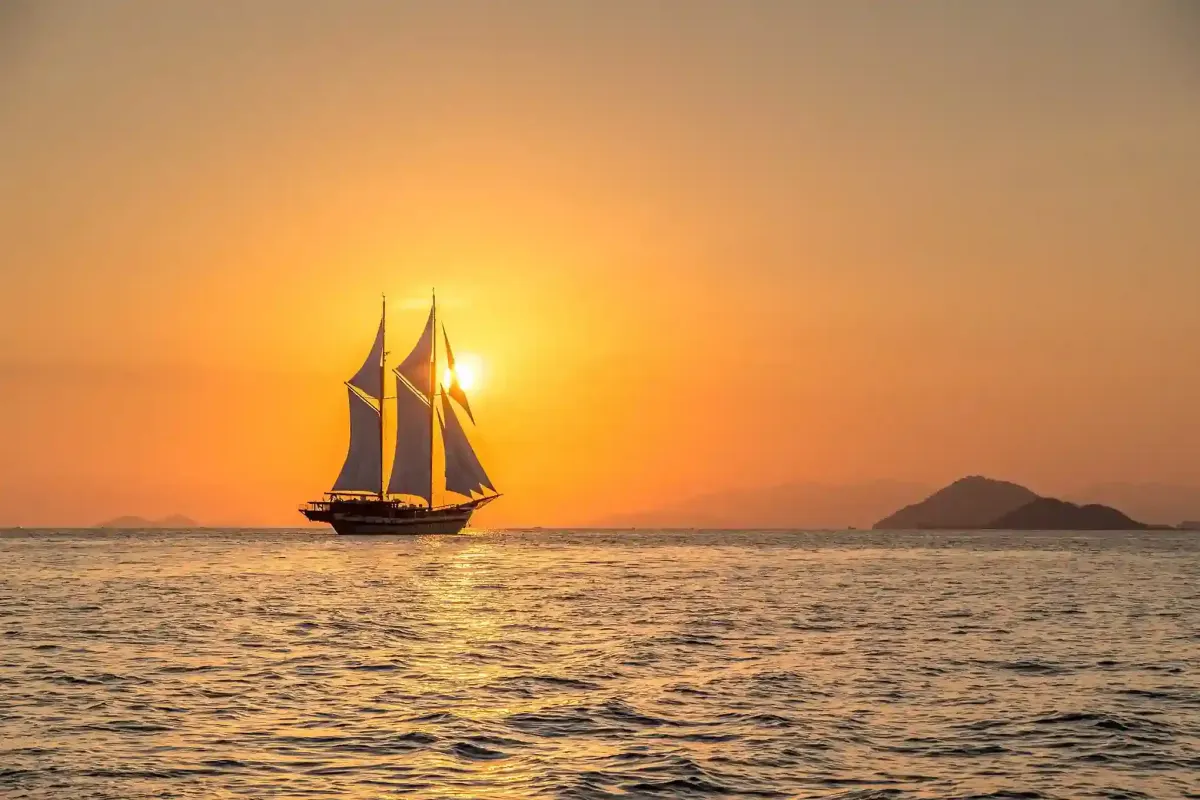
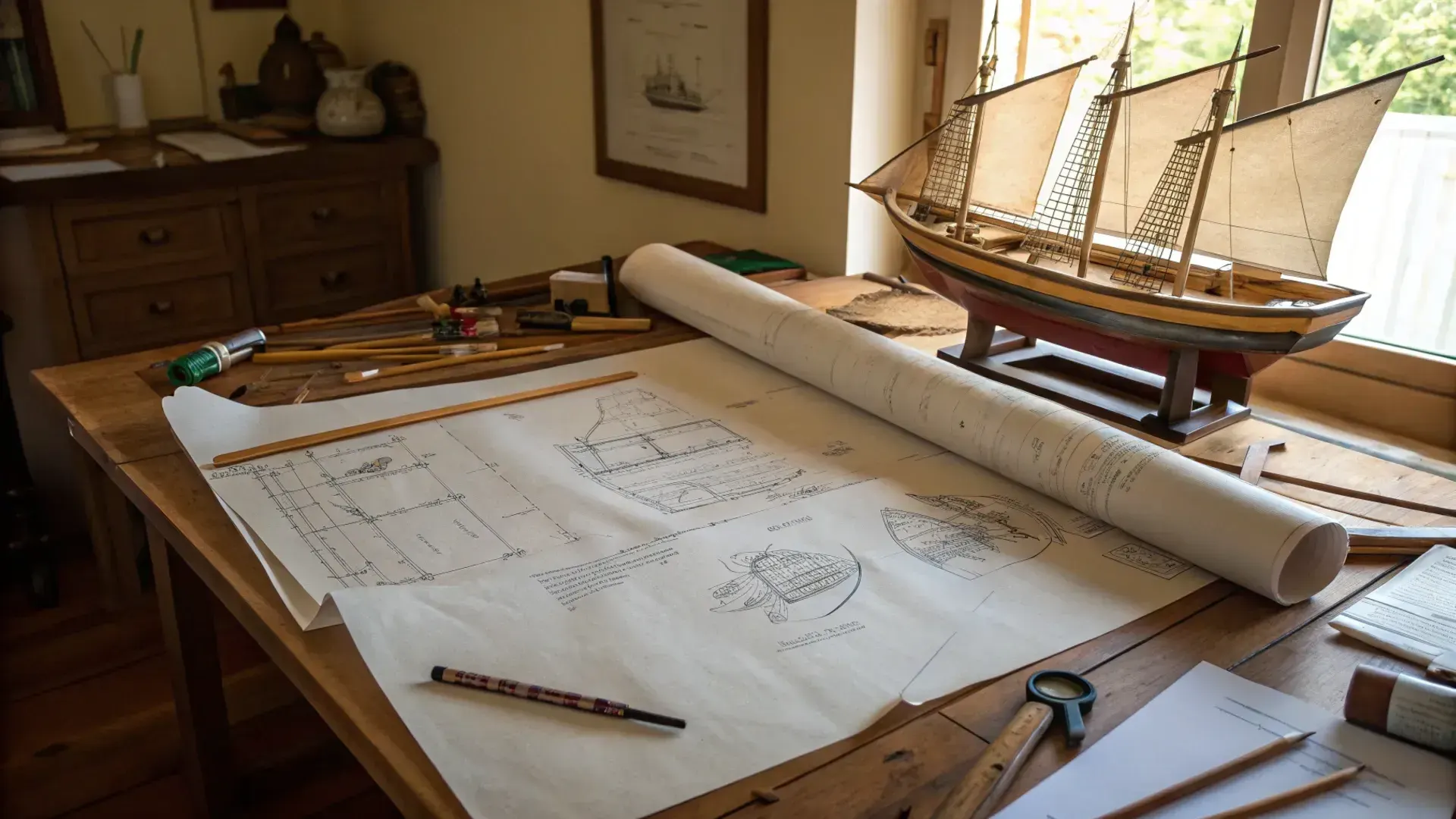
The air is thick with the scent of salt and sun-cured teak. From the daybed on my private aft deck, the volcanic silhouette of Sangeang Api volcano pierces a cobalt sky, a plume of smoke unfurling from its peak some 50 kilometers distant. Below, the turquoise water of the Flores Sea laps gently against the ironwood hull of the Samara, a 45-meter phinisi that feels less like a boat and more like a floating private estate. This is the new face of Indonesian exploration, a world away from crowded tour boats and fixed schedules. The journey through Komodo National Park is defined not by a checklist, but by the vessel itself—specifically, a custom indonesian phinisi that serves as both a sanctuary and a launchpad for adventure. These are not the rustic cargo haulers of yesteryear. The modern phinisi is a masterpiece of maritime engineering, a synthesis of ancient Bugis shipbuilding techniques and contemporary superyacht luxury. According to naval architect Jean-Pierre Djehan, who has overseen a dozen such projects in Sulawesi, “The magic is in the fusion. We honor the two-masted gaff rig and the hand-finished hull, recognized by UNESCO as an Intangible Cultural Heritage, but inside, clients demand stabilization systems, watermakers that produce 10,000 liters a day, and interiors by Parisian design firms.” The result is a vessel that can glide into shallow, sandy bays where superyachts cannot venture, offering a level of intimacy with the archipelago that is simply unattainable by other means. A project of this caliber, from initial design to launch, can take between 18 to 30 months, the craftsmanship involved.
Days 1-2: Of Dragons and Coral Gardens
Our journey begins not with a bang, but with a quiet, seamless transition. After landing at Komodo Airport (LBJ) in Labuan Bajo, a town rapidly transforming from a dusty port into a chic gateway, we are met on the tarmac. Within 20 minutes, we are aboard a high-speed tender, slicing through the harbor toward our floating home for the week. The cruise director, a marine biologist named Anto, greets us with chilled lemongrass tea as the crew handles our luggage. There is no formal check-in, only a brief safety orientation and a discussion of our preferences. “The itinerary is a suggestion,” Anto explains, unfurling a nautical chart across the sundeck’s massive teak table. “If you love a particular snorkel spot, we stay. If the mantas are schooling to the south, we go.” We set sail east, dropping anchor in the calm, protected waters off Rinca Island. The first evening is spent watching thousands of flying foxes depart for the mainland at sunset, a nightly spectacle that fills the sky for nearly 30 minutes. The following morning, after a breakfast of tropical fruits and perfectly poached eggs, we take the tender to the ranger station on Rinca. This island, slightly smaller than its famous neighbor Komodo, hosts a dense population of around 1,300 Komodo dragons. Our private ranger, who has worked in the park for 15 years, leads us on a two-hour trek, pointing out not just the formidable lizards but also wild water buffalo, Timor deer, and long-tailed macaques. By 11 AM, we are back on the phinisi, washing off the dust of the trail with a swim before the chef serves a grilled seafood lunch. The afternoon is dedicated to the underwater world at Siaba Besar, a site known affectionately as “Turtle Town,” where we snorkel with no fewer than a dozen green sea turtles. This is the rhythm of life on a custom indonesian phinisi; intense adventure punctuated by deep relaxation.
Days 3-4: Diving the Cauldron of the North
The true power of a private charter reveals itself as we head north, into the heart of Komodo National Park’s world-renowned dive territory. This area, where the Indian and Pacific Oceans collide, is a vortex of currents and nutrients, creating a marine ecosystem of staggering biodiversity. Our onboard PADI-certified divemaster, having assessed our skill levels, suggests a progression of sites. We start at the more forgiving Sebayur Kecil before graduating to the legendary, current-swept pinnacles. At Batu Bolong, a rock spire plunging 70 meters into the abyss, we descend into a kaleidoscope of anthias and fusiliers so thick they obscure the reef itself. We spot white-tip reef sharks patrolling the perimeter and giant trevallies hunting in coordinated packs. The next day, at Castle Rock, the experience is even more electric. The current requires a “negative entry”—a rapid descent to 20 meters to get below the strongest flow. The reward is a theater of pelagic life: grey reef sharks, schooling barracuda, and Napoleon wrasse the size of small children. Komodo National Park protects over 1,000 species of fish and more than 260 species of reef-building coral. For the non-divers in our group, the crew is equally attentive, launching paddleboards and kayaks in a placid bay, or taking them on a tender excursion to a deserted white-sand beach. The flexibility offered by a dedicated boat builder indonesia project is paramount here; the dive compressors are silent, the equipment is state-of-the-art, and the dive schedule is dictated by us, not a group of strangers. We dive when the tides are optimal, not when the day-trip boat arrives.
Day 5: The Tri-Colored View from Padar and the Science of Pink
No trip to Komodo is complete without witnessing the sunrise from the summit of Padar Island. We anchor in the bay overnight, and at 4:30 AM, the crew has coffee and light pastries ready. A short tender ride brings us to the trailhead, and we begin the 45-minute ascent in the cool, pre-dawn air. The view from the top is one of the most iconic in all of Indonesia: a tri-colored panorama of a white-sand beach, a black-sand beach, and a pink-sand beach, each set in its own crescent bay, the landmasses resembling primeval claws reaching into the sea. We are the only people here. By the time the first tourist boats from Labuan Bajo appear as specks on the horizon around 8 AM, we are already back on our phinisi, enjoying a full breakfast. Our next destination is one of those beaches: Pantai Merah, or Pink Beach. The distinctive color comes from microscopic organisms called Foraminifera, which produce a red pigment on the coral reefs. When these tiny fragments mix with the white sand, they create the soft, rosy hue. The snorkeling just offshore is superb, with healthy coral gardens in just a few meters of water. While we swim, the crew sets up a private beach club on the sand—shade umbrellas, comfortable loungers, and a full barbecue station. The chef grills fresh-caught snapper over coconut husks, served with vibrant local salads and chilled rosé. It’s a level of service and privacy that elevates a simple beach day into an memorable memory, a hallmark of the custom indonesian phinisi experience.
Days 6-7: Dancing with Giants and a Quiet Farewell
The final full day is reserved for one of the archipelago’s most sublime encounters: swimming with oceanic manta rays. We motor to Karang Makassar, a vast, shallow channel with a rubble bottom that serves as a cleaning station for these gentle giants. The current can be strong, so we perform a “drift snorkel.” The tender drops us at one end of the channel, and we simply float with the current as the mantas, some with wingspans exceeding four meters, glide effortlessly below and around us. It is a humbling, almost spiritual experience. After several drifts, we notice the channel is becoming crowded with nearly a dozen other boats. This is our cue to leave. Our captain, a Bugis sailor with 30 years of experience navigating these waters, suggests we head south, to a secluded anchorage off the coast of Nusa Kode he knows of. It’s a two-hour journey to a place rarely visited by charter fleets. Here, the landscape is more rugged, the cliffs more dramatic. We spend the afternoon completely alone, kayaking into a hidden cove where the water is impossibly clear. This is the agility of a private charter in action. On our final morning, there is no rush. We enjoy a long, leisurely breakfast, take one last swim off the transom, and share stories with the crew, who now feel like family. The slow sail back to Labuan Bajo is a time for reflection, watching the islands drift by, the engine a distant hum. The journey has been shaped by the incredible capabilities of both the crew and the vessel, a floating platform for discovery built by a premier boat builder indonesia to handle precisely these diverse conditions with grace and stability.
Quick FAQ: Your Custom Phinisi Journey
What is the best time of year to visit Komodo?
The dry season, from April to December, is ideal. It offers the calmest seas and best underwater visibility, with the absolute peak conditions for weather and wildlife sightings occurring between June and September. During these months, daily temperatures average around 30°C.
How ‘custom’ is a custom Indonesian phinisi charter?
Entirely. Weeks before your trip, you will consult with the cruise director to plan everything from the menu—catering to any dietary need from vegan to kosher—to the wine and spirits list. The daily activities, be it diving, trekking, watersports, or spa treatments, are adjusted on the fly to match your mood and energy levels. It is, in essence, your own private floating resort.
What distinguishes a luxury custom build from a standard phinisi?
The difference is monumental. A standard vessel is often a converted cargo or fishing boat. A luxury build from a top-tier boat builder indonesia involves a naval architect, adherence to international maritime safety standards (like RINA or Lloyd’s), and features like gyro-stabilizers for comfort, silent generators, advanced navigation systems, and interiors crafted with materials like Italian marble and designer fabrics. The quality of construction ensures a safer, more comfortable, and far more capable vessel.
Is Komodo only for expert divers?
Absolutely not. While the park is famous for its challenging drift dives, a private charter excels at catering to all skill levels. There are dozens of protected, shallow coral gardens with minimal current that are perfect for snorkelers, children, and beginner divers. An onboard private instructor can even provide Discover Scuba or full PADI certification courses during your trip.
The Vessel as the Destination
A week in Komodo aboard a vessel of this caliber recalibrates one’s definition of travel. The destination is not merely a place you visit; it’s an experience you inhabit. The phinisi ceases to be a mode of transport and becomes the very heart of the journey—a private viewing platform for primordial dragons, a five-star restaurant with an ever-changing oceanic backdrop, and a silent sanctuary under a canopy of unfamiliar stars. The true luxury lies in the freedom the boat provides: the freedom to change course, to linger, to discover, and to connect with this raw, magnificent corner of the world on your own terms. For those who dream not just of chartering such a vessel, but of bringing their own vision to life on the water, the journey begins with an expert partner. The artisans and naval architects at Boat Builder Indonesia represent the gold standard in creating these magnificent ships, turning the dream of ultimate archipelagic exploration into a tangible reality.