The Ultimate Raja Ampat Sailing Route for Your Indonesian Liveaboard
9 min read

• Northern Route: Explores the iconic karst pinnacles of Wayag and the accessible viewpoints of Piaynemo.
• Central Passage: Traverses the nutrient-rich Dampier Strait for encounters with giant oceanic manta rays.
• Southern Loop: Ventures to the remote Misool region, renowned for its vibrant soft corals and pristine reefs.
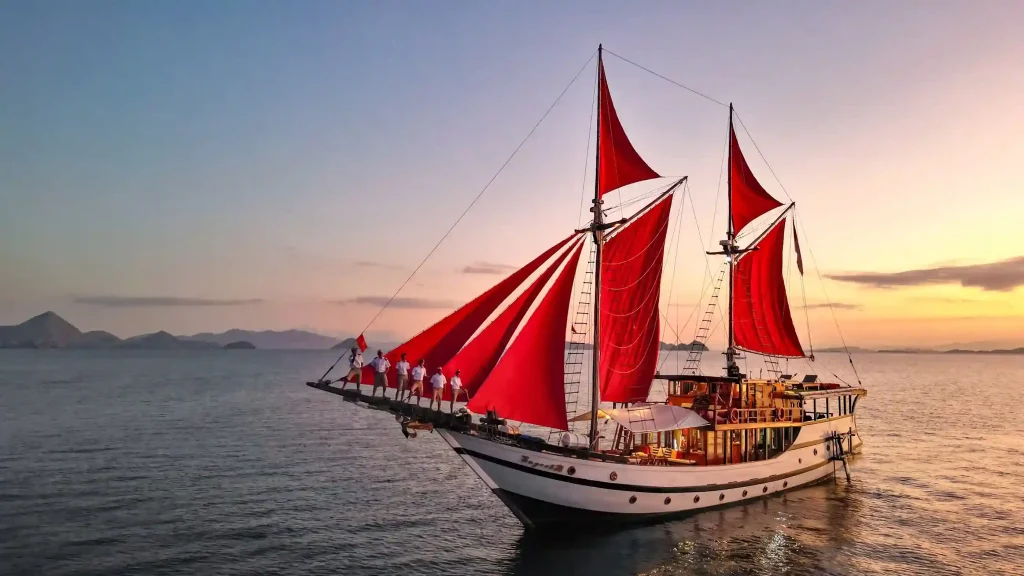
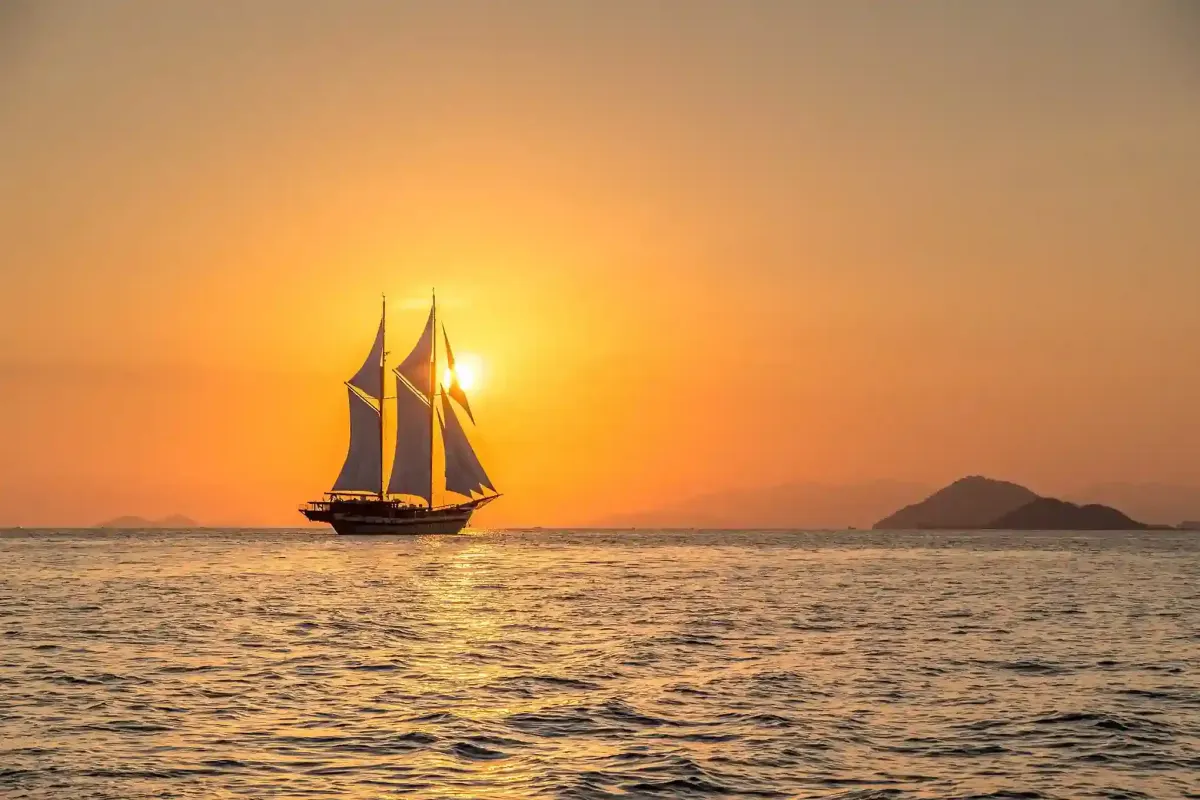
The air hangs heavy and warm, thick with the scent of salt and damp earth. From the teak deck of a custom-built Phinisi, the world simplifies to the rhythmic creak of timber and the gentle slap of turquoise water against the hull. The sun, a searing white disk in the equatorial sky, bakes the ironwood planks under your bare feet. Ahead, a labyrinth of emerald-green islands, mushroom-shaped and draped in ancient jungle, rises vertically from a sea so clear it feels like floating on air. This is the moment your journey begins, the moment you cast off from the known world and set sail into the heart of the Coral Triangle. This is Raja Ampat, and this is the definitive route for experiencing it aboard your indonesian liveaboard.
Charting Your Course: Sorong and the Gateway to Paradise
Every grand expedition requires a precise point of departure, and for Raja Ampat, that nexus is Sorong. This bustling port city in West Papua, while functionally industrial, serves as the critical logistical hub for every vessel venturing into the archipelago. After flying into Domine Eduard Osok Airport (SOQ), you are whisked away from the hum of civilization to the tranquil harbor where your vessel awaits. The transition is profound; within an hour, the chaos of the city is a distant memory, replaced by the quiet efficiency of your crew and the promise of the open water. As I often advise discerning travelers, the first evening is best spent acclimatizing aboard your vessel, enjoying a sundowner as the crew makes final preparations for an overnight passage. This initial sail, often east towards the Dampier Strait, is a journey in itself. You feel the powerful, custom-built engines engage, leaving the lights of Sorong twinkling in your wake. The archipelago consists of over 1,500 islands scattered across 40,000 square kilometers, a territory so vast that a meticulously planned route is not a luxury, but a necessity. The first night’s gentle rocking is a prelude to the adventure, a promise of the wonders that will greet you with the morning sun.
The Dampier Strait: Manta Rays and The Passage of Legends
Your first dawn reveals the dramatic topography of the Dampier Strait, the wide channel separating the islands of Waigeo and Batanta. This passage is the circulatory system of Raja Ampat, where powerful currents from the Pacific and Indian Oceans converge, creating a nutrient-rich soup that fuels an explosion of marine life. This is where your expedition truly gets its sea legs. We’re not just talking about a few fish; we’re talking about a biomass that is, according to marine biologists, ten times greater than anything in the Caribbean. The strait is world-famous for its manta ray cleaning stations, specific locations where these gentle giants, with wingspans reaching up to 5 meters, congregate to have parasites removed by smaller fish. Dive sites like Manta Sandy and Blue Magic are legendary for a reason. Dropping into the water here is an exercise in sublime humility. You hover, neutrally buoyant, as squadrons of oceanic mantas glide effortlessly through the current, sometimes just inches away. The experience is hypnotic, a ballet of giants in the deep blue. A skilled captain is paramount here; navigating these currents, which can exceed 6 knots, requires deep local knowledge. The right vessel, one designed by a premier boat builder indonesia, provides the stability and the specialized dive platform needed to safely access these exhilarating sites.
Wayag Islands: The Labyrinth of Karst Pinnacles
After the thrill of the Dampier Strait, the journey turns north towards the undisputed crown jewel of Raja Ampat: the Wayag Islands. This is a multi-day passage, a voyage that underscores the magnificent isolation of this archipelago. As you sail, the islands become more dramatic, the feeling of remoteness more acute. Wayag is the image that has graced a thousand magazine covers, a surreal seascape of conical karst islands piercing a turquoise sea. There are no villages here, no permanent settlements—only raw, untouched nature. The primary objective for most visitors is the challenging 45-minute climb to the summit of Mount Pindito. It’s a scramble over sharp, fossilized coral rock, but the reward is one of the most sublime panoramas on Earth. From this vantage point, you gaze down upon a protected, circular lagoon dotted with dozens of smaller islets, the entire scene framed by the deep blue of the Pacific. It’s a view that reorders your sense of scale and beauty. Beyond the climb, the sheltered lagoons of Wayag are a playground for exploration. Launching a kayak or a paddleboard from your indonesian liveaboard allows you to glide silently through these placid waters, discovering hidden coves and observing juvenile blacktip reef sharks darting through the shallows. This is where the design of your vessel truly shines; a shallow draft allows access to anchorages off-limits to larger ships, granting an exclusive, intimate experience of this world-class wonder.
Piaynemo: A Miniature Wayag with Intimate Charm
While Wayag offers grandeur on an epic scale, the island group of Piaynemo, located further south, provides a more accessible and equally captivating experience. Often referred to as “Little Wayag,” Piaynemo presents a similar karst topography but on a more intimate scale. The journey from the northern reaches back towards the central archipelago is a perfect time to appreciate the craftsmanship of your vessel.This page is maintained by the Boat Builder Indonesia Network Desk. It carries no individual byline: the guidance here — “The Ultimate Raja Ampat Sailing Route for Your Indonesian Liveaboard” — is researched and checked by the desk rather than by one named person. A well-built Phinisi doesn’t just travel the sea; she breathes with it.” Upon arrival at Piaynemo, the most famous viewpoint is reached via a well-maintained wooden staircase of approximately 320 steps. The climb is far less arduous than Wayag’s, making it suitable for a wider range of fitness levels. From the top, the view is spectacular: a collection of islets that form a shape often likened to a star, set within a lagoon of impossible blues and greens. Piaynemo is also the gateway to some of the most celebrated coral gardens in Raja Ampat. A short tender ride away lies Melissa’s Garden, a sprawling underwater plateau completely covered in a kaleidoscope of healthy hard corals. Snorkelers and divers alike will be mesmerized by the sheer density and diversity of life here, the region’s protected status within the Raja Ampat Marine Park.
Misool: The Southern Jewel of Unrivaled Biodiversity
The final, and perhaps most rewarding, leg of this ultimate route is the long southern passage to Misool. This remote island group is a world apart, even from the rest of Raja Ampat. The underwater landscape here is dominated by a profusion of soft corals, which paint the reefs in vibrant shades of orange, red, and purple. Misool is a conservation success story; the 300,000-acre Misool Marine Reserve is a strict no-take zone, and the results are staggering. The sheer volume of fish is almost overwhelming. At sites like Magic Mountain, you can witness oceanic mantas being cleaned at the same time grey reef sharks patrol the periphery and massive schools of fusiliers flow like rivers over the reef. The topography is also unique, featuring dramatic underwater windows like Boo Windows and labyrinthine cave systems. Above the water, ancient history is etched onto the cliffs in the form of petroglyphs, some estimated to be over 5,000 years old. Reaching this southern sanctuary requires a vessel with significant range and seakeeping capabilities. The open-water crossings can be challenging, which is why a bespoke vessel from a trusted boat builder indonesia is not just a luxury but a critical component of a successful expedition. The biodiversity in this region is so significant that it is a key reason for Raja Ampat’s inclusion on the UNESCO World Heritage tentative list.
Quick FAQ about Your Raja Ampat Expedition
Q: When is the best time to visit Raja Ampat?
A: The prime season runs from October to April, during the dry northwest monsoon. This period generally offers calmer seas and clearer skies, making it ideal for both sailing and diving. The shoulder months of May and September can also be excellent, with fewer boats in the area.
Q: How long should a liveaboard trip be?
A: To comfortably experience the route described—covering the Dampier Strait, a northern highlight like Wayag or Piaynemo, and the southern jewel of Misool—a minimum of 10 to 12 nights is essential. Anything shorter would feel rushed and require sacrificing one of these critical regions.
Q: What permits are required for sailing in Raja Ampat?
A: All visitors must purchase a Raja Ampat Marine Park Entry Permit (known as a PIN). As of 2023, the cost is IDR 1,000,000 (approximately $70 USD) for foreign tourists and is valid for 12 months. Your liveaboard operator will almost always arrange this for you in advance.
Q: Is Raja Ampat suitable for non-divers?
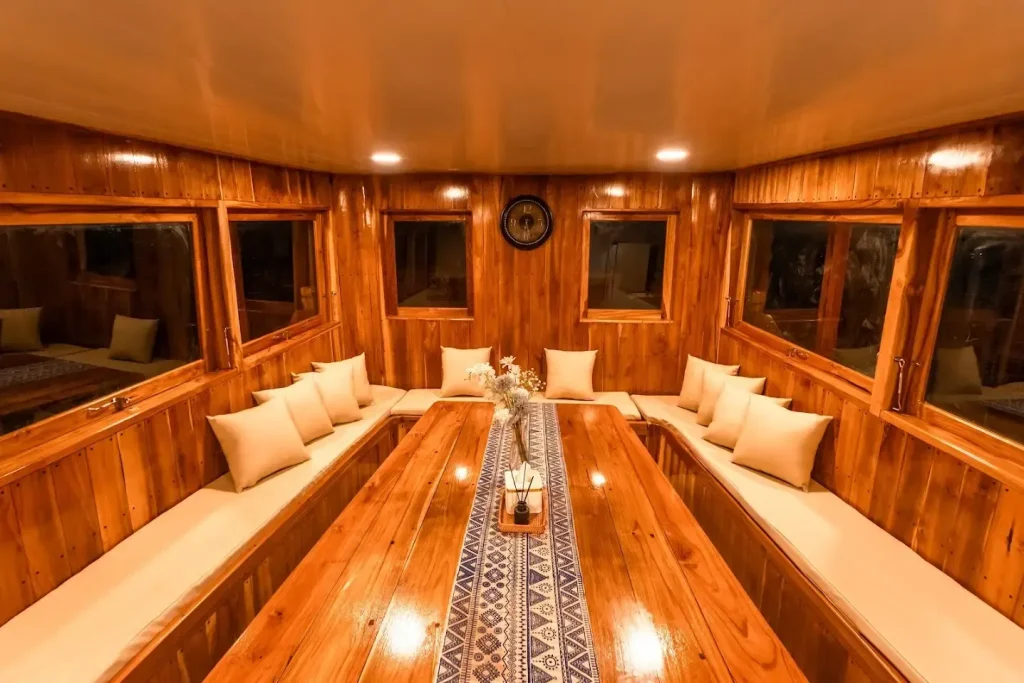
A: Absolutely. While it is a diver’s paradise, the snorkeling is arguably some of the best on the planet, with vibrant reefs starting just inches below the surface. Coupled with world-class kayaking, paddleboarding through serene lagoons, hiking to epic viewpoints, and exceptional birdwatching (including the Wilson’s and Red Bird-of-Paradise), it offers a complete nature immersion experience for everyone. A custom phinisi yacht construction can even be designed with specific non-diving activities in mind, featuring larger tenders for shore excursions or dedicated storage for adventure gear.
A journey through Raja Ampat is more than a vacation; it is a pilgrimage to one of the last truly wild places on Earth. It is a reminder of the planet’s raw, untamed beauty. Navigating this remote paradise requires a vessel that is not merely a mode of transport, but an extension of the adventure itself—safe, comfortable, and capable. The journey of a lifetime deserves a vessel to match. When you’re ready to commission your indonesian liveaboard and chart a course for the extraordinary, the master craftsmen are ready to bring your vision to life. Explore the possibilities with the finest boat builder indonesia has to offer and begin your own legend in the archipelago of kings.